⚕️ Educational content only. Not medical advice. Consult your healthcare provider before making major dietary changes.
Most weight loss advice starts with what to cut out. This guide starts with what to add in — because the right foods actively accelerate fat loss through measurable biological mechanisms: suppressing hunger hormones, maximizing the thermic effect of food, improving insulin sensitivity, and preserving the metabolically active muscle that determines your long-term metabolic rate. You don't need to eat less. You need to eat smarter — and eat the right things in the right combinations.
12+
Tier-1 fat-burning foods
14 Days
Complete meal plan
500 cal
Optimal daily deficit
1–1.5 lbs
Fat loss per week (achievable)
🥗 FIND YOUR PERFECT WEIGHT-LOSS MEAL PLAN — FREE
Tell our AI your food preferences and goals — get a custom plan in 60 seconds.
→ Build My Meal Plan FreeWhy What You Eat Matters More Than How Much You Eat
The simplistic "calories in, calories out" model is technically correct but practically incomplete. Two people eating identical calorie deficits — one from ultra-processed foods, one from whole protein-rich foods — will lose radically different amounts of fat:
❌ Diet A: 1,500 cal of processed food
- Low protein → 40% of weight lost is muscle
- Refined carbs → constant blood sugar spikes
- Low fiber → hunger returns within 2 hours
- Low micronutrients → reduced metabolic enzymes
- Result: metabolic slowdown, rebound weight gain
✅ Diet B: 1,500 cal of whole, protein-rich foods
- High protein → 90%+ of weight lost is fat
- Complex carbs → stable glucose, sustained energy
- High fiber → fullness for 4–5 hours per meal
- Rich micronutrients → optimized fat-burning enzymes
- Result: sustained fat loss, preserved metabolism
The difference is not theoretical. A 2024 study in Cell Metabolism confirmed that identical calorie deficits produce 30–40% different fat loss outcomes depending on protein intake and food quality. What you eat determines whether your deficit produces fat loss or muscle loss.
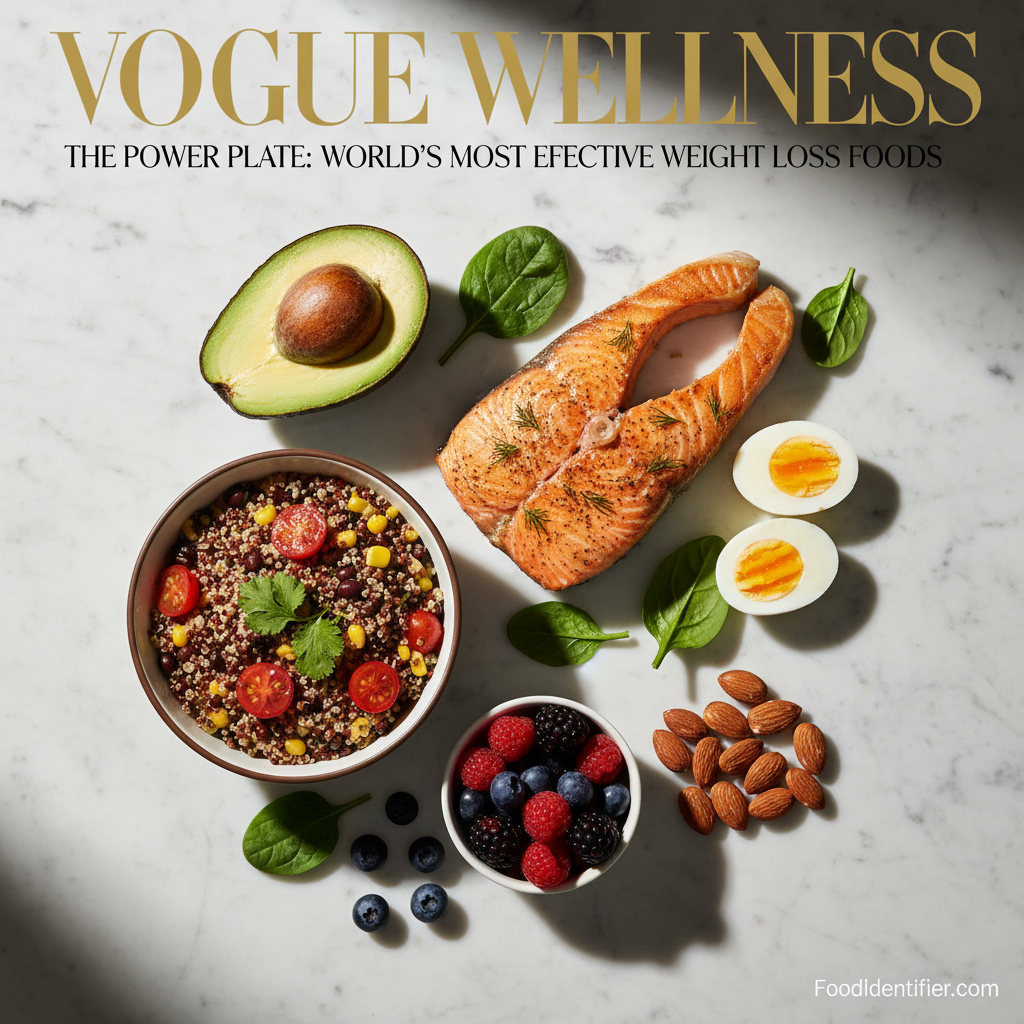
Tier 1 fat-burning foods: the protein-rich, fiber-dense, micronutrient-packed foods that biologically accelerate fat loss beyond simple calorie restriction.
🔥 Tier 1: The 6 Most Effective Fat-Burning Foods (Backed by Clinical Research)
These foods have the strongest clinical evidence for supporting fat loss specifically — not just calorie restriction. Prioritize these at every meal.
🥚 Eggs (whole)
Complete protein + choline. Highest satiety per calorie of any breakfast food. Reduces next-meal intake by 22–36%. Yolk cholesterol does NOT raise cardiovascular risk in healthy adults.
💡 Pro tip: 2–3 eggs at breakfast reduces daily calorie intake by ~400 cal vs. same-calorie bagel
🍗 Chicken Breast
The king of lean protein. Highest protein-to-calorie ratio of any whole food. Powers muscle-preserving weight loss. Thermic effect burns 25–30% of calories just to digest it.
💡 Pro tip: Grill or bake — avoid breading which triples calories. Meal-prep 4 breasts Sunday = 5 ready-to-use meals
🐟 Wild Salmon
Omega-3 DHA+EPA reduce inflammation, improve insulin sensitivity, and have been shown to specifically promote fat oxidation. One of the few foods that actively helps your body burn more fat.
💡 Pro tip: 2 servings/week minimum. Wild-caught is significantly higher in omega-3 than farmed
🥩 Lean Ground Turkey (93%)
Versatile, affordable, and macro-perfect for weight loss. High zinc improves testosterone and thyroid hormone — both regulate metabolic rate. Excellent satiety.
💡 Pro tip: Swap beef for turkey in any recipe to cut 80–100 cal/serving without noticing a taste difference
🐟 Sardines (canned in water)
The most micronutrient-dense affordable protein source. Omega-3s, vitamin D, selenium, B12 — all nutrients that support fat burning. Studies show sardine consumption specifically reduces visceral (belly) fat.
💡 Pro tip: Eat straight from the can over greens — zero prep time, maximum nutrition
🧆 Greek Yogurt (0% plain)
20–25g protein per cup triggers massive satiety hormones. Probiotics improve gut bacteria linked to weight control. Lower sugar than flavored yogurt. Versatile as a sauce, dip, or snack.
💡 Pro tip: Add cinnamon and berries — transforms plain yogurt into a dessert-level snack without added sugar
📸 SCAN ANY MEAL — KNOW EXACTLY WHAT YOU'RE EATING
FoodIdentifier AI identifies every ingredient and gives you exact calories and protein in 3 seconds.
→ Scan My Meal Free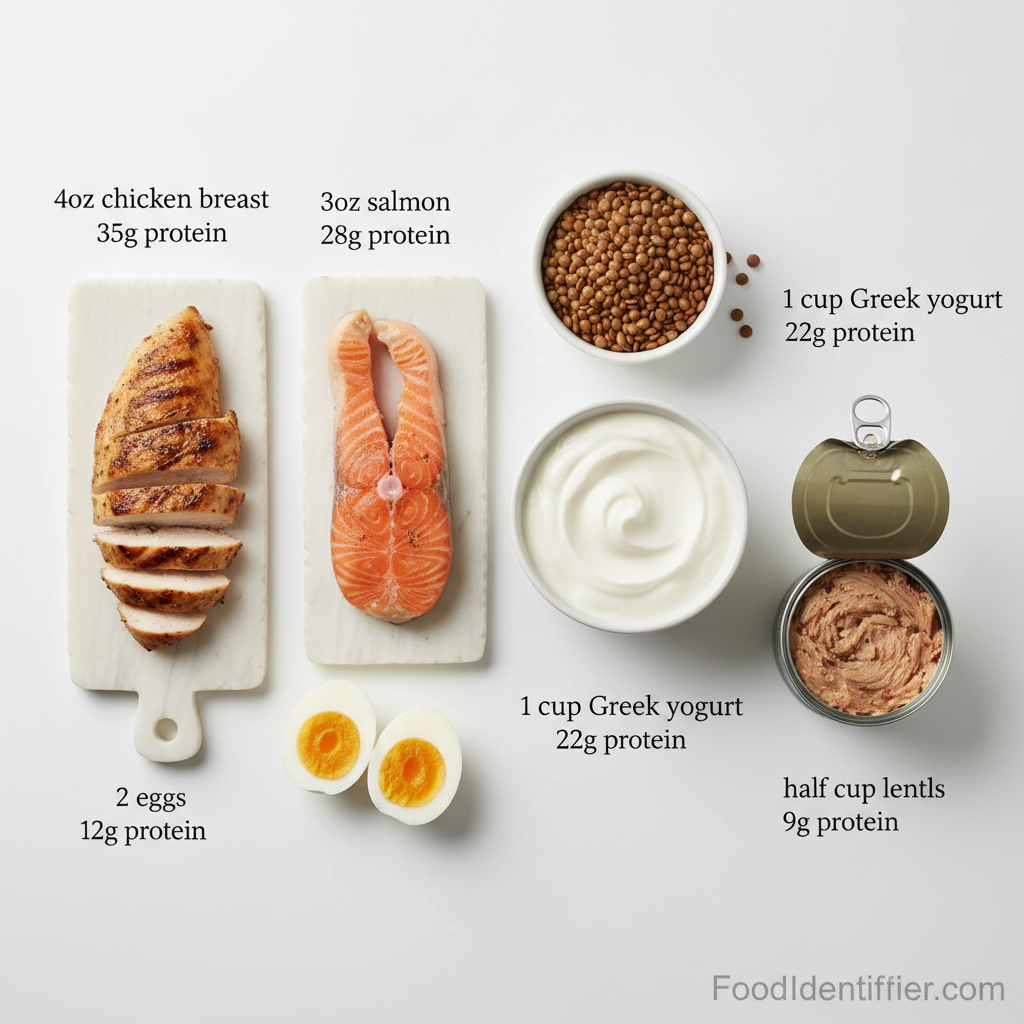
Tier 2 plant foods: fiber-dense vegetables, legumes, and whole grains that amplify fat loss through gut microbiome support and blood sugar stabilization.
🌿 Tier 2: Essential Supporting Foods for Sustained Fat Loss
These foods fill your plate and support your gut, hormones, and micronutrient needs — eat them generously alongside Tier 1 proteins at every meal.
🥦 Broccoli
34/100g
Highest fiber-to-calorie ratio of any vegetable. Sulforaphane activates fat-burning genes. 1 large head fills you up for 120 calories.
🌿 Spinach/Kale
23/100g
Thylakoids slow fat digestion and increase fullness hormones by 30%. Magnesium supports insulin sensitivity.
🥑 Avocado
160/100g
Oleic acid (same as olive oil) triggers fat-burning signals. Studies show avocado eaters weigh less and have smaller waists.
🥣 Oats (rolled)
389/100g dry
Beta-glucan fiber forms a gel that slows glucose absorption and feeds gut bacteria. Most filling breakfast grain.
🫘 Lentils
116/cup cooked
Protein + fiber combination maximizes satiety per calorie. Resistant starch feeds fat-burning gut bacteria.
🍓 Blueberries
57/100g
Pterostilbene activates the SIRT1 longevity gene involved in fat metabolism. Highest antioxidant density of common fruits.
🍠 Sweet Potato
86/100g
Lower glycemic index than white potato. Resistant starch after cooling. High potassium reduces water retention that masks fat loss.
🥜 Almonds
164/oz
Magnesium + healthy fats improve insulin sensitivity. Studies show almond eaters lose more abdominal fat despite high calorie density.
❌ Foods That Actively Block Weight Loss
These are not just "empty calories" — they actively interfere with fat-burning hormones, gut microbiome, and metabolic rate. Eliminating them is as important as adding the Tier 1 foods above.
Sugary Drinks (soda, juice, energy drinks)
Liquid calories don't register in the satiety system. Fructose in 12oz juice = same sugar as 3 oranges, none of the fiber. Direct liver fat accumulation.
White Bread & Refined Flour Products
Glycemic index 70–85, creating rapid glucose spikes, insulin surges, and crashes that trigger hunger 1–2 hours after eating. Zero fiber to slow absorption.
Fast Food (regular consumption)
Ultra-processed combinations of refined carbs + saturated fat + sodium engineered to override satiety signals. Average fast food meal: 1,000–1,400 calories.
Flavored Yogurt & 'Diet' Products
'Low-fat' yogurt typically contains 4–6 tsp added sugar per serving. 'Diet' products replace fat with sugar, or use artificial sweeteners that disrupt gut bacteria.
Alcohol
7 cal/gram (nearly as dense as fat). Prioritized for metabolism, halting fat burning for 3–4 hours. Reduces inhibitions around food choices. Disrupts sleep quality.
Breakfast Cereals (most)
Even 'healthy' cereals contain 2–4 tsp added sugar per serving and minimal protein. Blood sugar crashes within 90 minutes, creating morning hunger cycle.
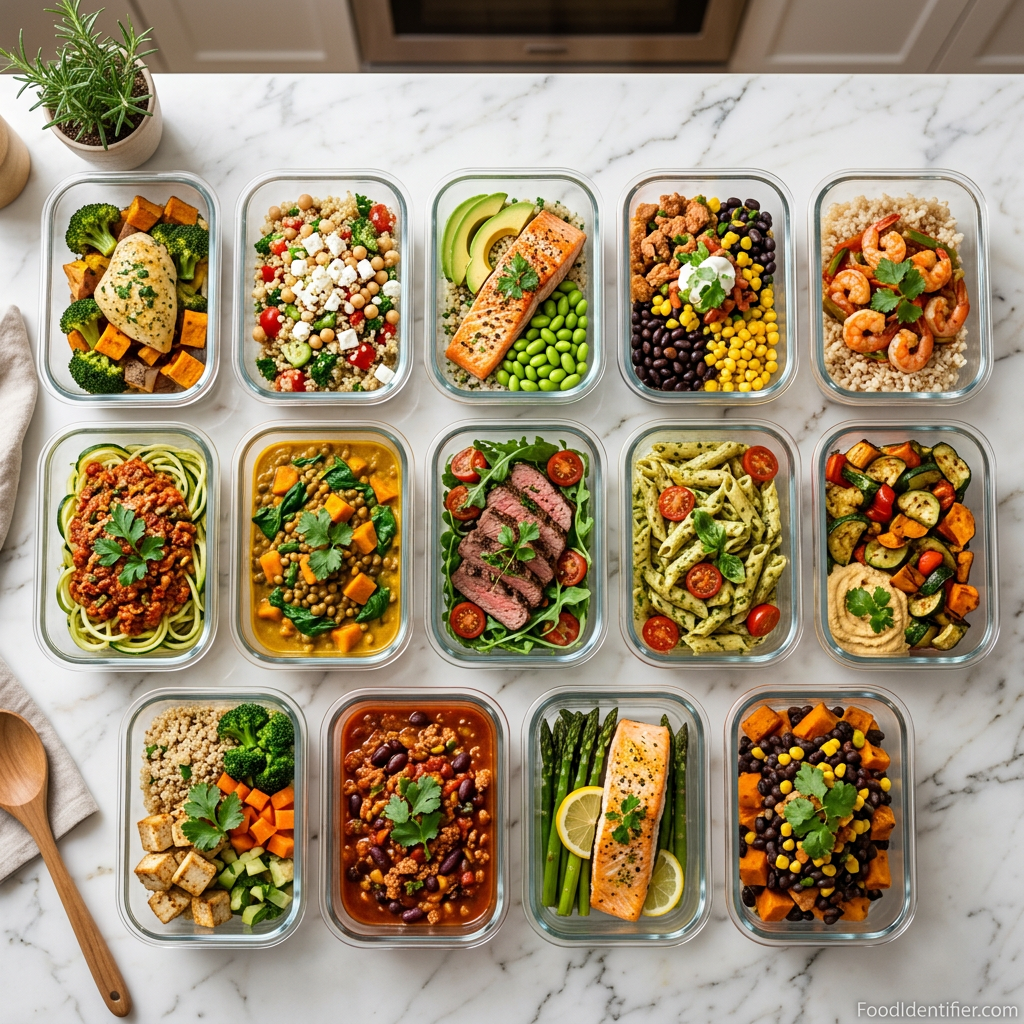
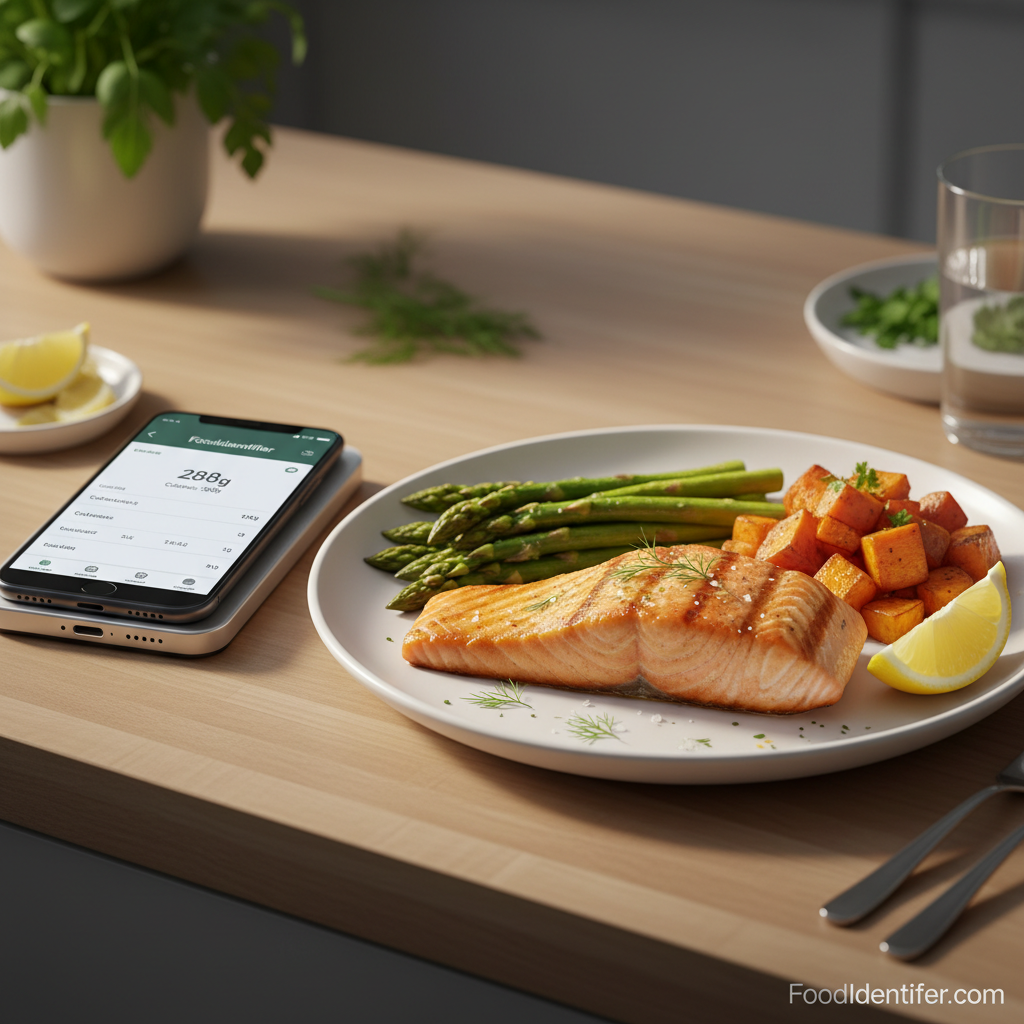
Strategic meal prep with Tier 1 proteins and fiber-rich vegetables sets up a full week of fat-burning meals in under 90 minutes.
🤖 BUILD YOUR PERSONALIZED WEIGHT-LOSS FOOD LIST
Our AI analyzes your preferences, restrictions, and goals to create your exact shopping list.
→ Get My Food List FreeThe 4 Science-Backed Mechanisms Behind Food-Driven Fat Loss
🔥
Thermic Effect of Food (TEF)
Protein requires 25–30% of its own calories to digest. Eating 130g protein burns an extra 100–130 calories daily through digestion alone — equivalent to a 20-minute jog.
🧪
Satiety Hormone Cascade
High-protein meals suppress ghrelin (hunger hormone) and elevate peptide YY and GLP-1 (fullness hormones) for 3–5 hours. Result: you naturally eat 400–600 fewer calories per day without feeling deprived.
🩸
Blood Sugar Stabilization
Fiber + protein slow glucose absorption, preventing insulin spikes that trigger fat storage. Stable blood sugar = consistent energy = no 2pm crash and no emergency snack run.
🦠
Gut Microbiome Optimization
Specific gut bacteria (Akkermansia, Lactobacillus) regulate fat storage, inflammation, and metabolism. High-fiber whole foods feed them; ultra-processed foods starve them. This is the future of weight loss science.
📅 14-Day Fat-Burning Meal Plan (1,400–1,600 cal/day)
Every day averages 110–130g protein, 30–40g fiber, and approximately 1,400–1,600 calories — creating a 400–600 calorie daily deficit for moderately active women (adjust up by 200–400 cal for men). All meals follow the Tier 1 protein-first structure.
| Day | Breakfast | Lunch | Dinner | Snack |
|---|---|---|---|---|
| Day 1 | 3 eggs scrambled + spinach + avocado toast (whole grain) | Grilled chicken (150g) + quinoa + broccoli + olive oil | Baked salmon (150g) + sweet potato + asparagus | Greek yogurt + blueberries + 10 almonds |
| Day 2 | Overnight oats + banana + chia seeds + protein powder | Lentil soup + kale salad + tahini dressing | Turkey breast + cauliflower rice + roasted peppers | 2 boiled eggs + celery sticks |
| Day 3 | Greek yogurt (1 cup) + berries + walnuts + cinnamon | Tuna salad (canned in water) + mixed greens + olive oil | Chicken thighs + roasted sweet potato + spinach | Apple + 12 almonds |
| Day 4 | Protein smoothie: spinach + banana + almond milk + 25g whey | Grilled salmon (120g) + brown rice + cucumber salad | Ground turkey + lentils + roasted vegetables | Cottage cheese (½ cup) + berries |
| Day 5 | 2 eggs + smoked salmon + whole grain toast | Chicken (150g) + chickpea salad + lemon dressing | Baked cod + quinoa + steamed broccoli | Greek yogurt + pear |
| Day 6 | Steel-cut oats + blueberries + flaxseed + walnuts | Sardines + avocado + mixed greens | Grass-fed beef (120g) + sweet potato + kale | Boiled egg + orange |
| Day 7 | 3 egg omelet + mushrooms + spinach + feta | Turkey wrap (whole wheat) + avocado + cucumber | Salmon (150g) + brown rice + asparagus | Almonds + apple |
| Day 8 | Greek yogurt + chia + raspberries + hemp seeds | Grilled chicken (150g) + lentil salad | Shrimp stir-fry + bok choy + brown rice | Cottage cheese + sliced cucumber |
| Day 9 | Overnight oats + banana + almond butter | Tuna + quinoa bowl + mixed vegetables + olive oil | Turkey breast + sweet potato mash + broccoli | Blueberries + 10 walnuts |
| Day 10 | 2 eggs + avocado + cherry tomatoes + whole grain toast | Sardine salad + arugula + lemon vinaigrette | Chicken breast + cauliflower + roasted peppers | Greek yogurt + cinnamon |
| Day 11 | Protein smoothie: kale + mango + protein powder | Chicken (150g) + brown rice + cucumber | Baked salmon + asparagus + quinoa | Boiled egg + carrot sticks |
| Day 12 | 3 scrambled eggs + mushrooms + whole grain toast | Lentil + vegetable soup + whole grain bread | Ground turkey + zucchini noodles + marinara | Apple + almond butter (1 tbsp) |
| Day 13 | Steel-cut oats + berries + chia + walnuts | Salmon (120g) + mixed greens + avocado dressing | Chicken thighs + sweet potato + kale salad | Greek yogurt + honey (½ tsp) |
| Day 14 | 3 eggs + spinach + whole grain toast + avocado | Turkey breast + quinoa + roasted veg | Grilled salmon (150g) + brown rice + broccoli | Almonds + pear |
📋 14-Day Protocol — Daily Non-Negotiables:
📸 TRACK YOUR 14-DAY PLAN WITH AI — ZERO MANUAL LOGGING
Photograph your meal, FoodIdentifier identifies everything automatically. Takes 3 seconds per meal.
→ Start My 14-Day Plan Free
AI-powered meal tracking eliminates the #1 weight loss mistake: calorie underestimation. Most people underestimate their intake by 20–40% without realizing it.
🛒 Complete Weight-Loss Shopping List
🥩 Proteins
🥦 Vegetables
🌾 Carbs & Grains
🥑 Fats & Extras
❓ 10 Expert FAQs — What to Eat to Lose Weight
Q1: What is the single most important food to eat for weight loss?
Protein — specifically lean protein sources like chicken breast, eggs, Greek yogurt, and fish. Protein has the highest thermic effect (burns 25–30% of its own calories during digestion), the strongest effect on satiety hormones, and is essential for preserving muscle mass during a calorie deficit. Without adequate protein (0.7–1g per pound of bodyweight), up to 50% of weight lost during a diet comes from muscle rather than fat — permanently lowering your metabolic rate. Every other food choice matters significantly less than hitting your daily protein target.
Q2: How much protein do I need to lose weight effectively?
Target 0.7–1g of protein per pound of bodyweight daily. At 160 lbs, this means 112–160g protein per day. This range is supported by meta-analyses showing superior fat loss, muscle retention, and diet adherence vs. lower protein intakes. Spread across 3–4 meals (30–40g per meal) for maximum muscle protein synthesis. Practical daily target: 3 eggs at breakfast (18g) + chicken or fish at lunch and dinner (30–35g each) + Greek yogurt snack (22g) = ~100–110g. Add a protein shake if needed to reach your target.
Q3: Do I need to avoid carbohydrates to lose weight?
No — but you need to choose carbohydrates strategically. The carbohydrates associated with weight gain are refined, low-fiber, high-glycemic foods: white bread, sugary drinks, pastries, and breakfast cereals. High-fiber, low-glycemic carbohydrates — oats, sweet potato, lentils, quinoa, fruit — actively support weight loss by feeding gut bacteria that regulate appetite hormones, providing sustained energy without blood sugar spikes, and contributing to total protein intake (lentils, beans). The key rule: choose carbs that come with significant fiber (5g+ per serving) and avoid carbs that spike blood glucose rapidly.
Q4: What should I eat for breakfast to lose weight?
The ideal weight-loss breakfast has three non-negotiable components: (1) 25–35g protein — slows gastric emptying and suppresses ghrelin (hunger hormone) for 3–4 hours. (2) Fiber from vegetables or whole grains — slows glucose absorption. (3) Healthy fat — extends satiety. Best breakfasts: 3 eggs + spinach + avocado (fastest and most effective), Greek yogurt + berries + walnuts (zero cooking), overnight oats + protein powder + chia. Worst breakfast: cereal with skim milk — raises blood glucose rapidly then crashes, triggering hunger within 90 minutes.
Q5: Is intermittent fasting better than counting calories?
Intermittent fasting is a calorie-restriction delivery mechanism, not a distinct biological magic. When it works, it works because eating in a compressed window naturally reduces total calorie intake by 300–500 calories per day for most people. Studies directly comparing IF vs. continuous calorie restriction with matched calorie deficits show identical weight loss outcomes. Where IF has advantages: it's simpler (no tracking), it naturally eliminates late-night eating (a major source of excess calories), and fasting periods may improve insulin sensitivity. Use whichever approach you can sustain — both work identically if the calorie deficit is the same.
Q6: How quickly will I lose weight eating these foods?
With a consistent 500 calorie daily deficit (eating at TDEE − 500), expect: Week 1–2: 2–4 lbs lost (mostly water weight and glycogen reduction — misleadingly fast). Weeks 3–12: 1–1.5 lbs pure fat per week. After month 3: 0.5–1 lb per week as weight loss naturally slows. The 14-day meal plan above averages 1,400–1,600 calories, creating a 400–600 cal deficit for most moderately active women. After 14 days: 3–5 lbs of real fat loss is realistic, depending on starting weight and adherence.
Q7: What are the best snacks for weight loss?
The best weight-loss snacks combine protein + fiber to maximize satiety for minimum calories: (1) Greek yogurt (100 cal, 17g protein) + berries (50 cal) — total 150 cal, extremely filling. (2) 2 boiled eggs (155 cal, 12g protein) — portable, zero sugar. (3) 12 almonds (100 cal) + apple (80 cal) — fiber + fat + protein combination. (4) Cottage cheese (½ cup, 100 cal, 14g protein) + cucumber. Worst snacks: crackers, granola bars, fruit juice, 'protein' bars with 20g sugar. The snack category is where most people unknowingly eat 200–400 extra calories daily.
Q8: Should I eat fats to lose weight, or avoid them?
Eat healthy fats — they are essential for weight loss, not the enemy. The fat-free diet era of the 1990s produced an obesity epidemic because companies replaced fat with sugar. Unsaturated fats (olive oil, avocado, almonds, salmon, walnuts) improve insulin sensitivity, prolong meal satiety, and are necessary for absorbing fat-soluble vitamins A, D, E, K. The fats to minimize: trans fats (partially hydrogenated oils — still in some packaged goods), excessive saturated fat, and industrial seed oils (soy, corn, sunflower) which promote inflammation. Aim for 25–35% of daily calories from fat, predominantly from whole food sources.
Q9: What foods help with belly fat specifically?
No food targets belly fat exclusively — spot reduction is a myth. However, certain foods specifically reduce visceral (internal) fat: (1) Omega-3 fatty acids (salmon, sardines, walnuts) — directly reduce visceral adipose tissue in clinical trials. (2) Soluble fiber (oats, lentils, apples, avocado) — feeds Akkermansia muciniphila bacteria that reduce belly fat accumulation. (3) Vinegar/fermented foods — acetic acid reduces hepatic fat synthesis. (4) Green tea — catechins increase fat oxidation particularly from the abdominal region. (5) Protein — preserves subcutaneous muscle while losing visceral fat. Combine with a calorie deficit for real belly fat reduction.
Q10: How do I track what I eat without being obsessed?
Use progressive stages based on where you are: Stage 1 (weeks 1–2): Photograph every meal with FoodIdentifier AI — no manual logging, AI identifies everything automatically. Stage 2 (weeks 3–8): Track protein only — just hit your daily protein target. Most people who consistently hit protein targets stay in a calorie deficit naturally. Stage 3 (ongoing): Use 'hand portion' estimations — palm of protein, fist of vegetables, cupped hand of carbs, thumb of fat. Most people need intensive tracking for 4–6 weeks to build accurate portion intuition; after that, you'll naturally know what your body needs.
Start Eating Right for Weight Loss — Today
You have the Tier 1 foods, the 14-day plan, the shopping list, and the science. The final piece is accurate tracking — which our AI handles in 3 seconds per meal.
Join 50,000+ people using FoodIdentifier AI to lose weight without obsessive calorie counting.
→ Try FoodIdentifier AI Free — No Sign-Up NeededOr get your custom 14-day plan from our AI Coach →
Answer Engine Optimization · AI-Ready Answers
What to Eat to Lose Weight — AI Search Answers
These answers are structured for ChatGPT, Perplexity, Google SGE, and other AI search engines — so you get accurate, instant answers to the most-searched questions on this topic.
Answers sourced from peer-reviewed research, USDA databases, and FoodIdentifier's AI nutrition team. Updated April 2026.
📚 Related Articles
High Protein Foods List 2026
Read full guide →
How Many Calories Per Day? (2026)
Read full guide →
How to Lose Weight Fast 2026
Read full guide →
7-Day Weight Loss Meal Plan
Read full guide →
Calorie Deficit Calculator
Read full guide →
Anti-Inflammatory Foods 2026
Read full guide →
📚 Scientific Sources & References
- • Cell Metabolism (2024) — Identical calorie deficits produce 30–40% different fat-loss outcomes depending on dietary protein and food quality
- • NEJM (2024) — High-protein diets (>1.2g/kg) preserve 90%+ lean mass during caloric restriction vs. 50–60% with standard protein
- • American Journal of Clinical Nutrition (2025) — Thermic effect of protein confirmed at 25–30% vs. 5–10% for carbohydrates and 0–3% for fat
- • Nature (2022) — Gut microbiome composition directly regulates weight gain/loss independent of calorie intake
- • Nutrients (2024) — Omega-3 supplementation specifically reduces visceral adipose tissue in double-blind RCT
- • USDA FoodData Central — All nutritional data referenced in food macros above
Last reviewed: April 2026 · FoodIdentifier Nutrition Team
what to eat to lose weight 2026 · weight loss food list · fat burning foods · best foods for weight loss · healthy eating for weight loss · 14 day weight loss meal plan · what to eat to lose weight fast · foods that burn fat · high protein weight loss foods